
As your financial adviser, one of the most important things I can do is help keep you and your hard-earned money safe — so today I want to talk about something that’s affecting more and more people in Ireland = Financial Fraud. Financial fraud is on the rise – with online fraud up by 120% last year! Scammers are getting smarter every day, and unfortunately anyone can be a target.
Here are a few things to watch out for:
- Investment scams – If someone promises you guaranteed high returns with little or no risk, walk away. If it sounds too good to be true, it almost always is! Watch out for ‘cloned firms’ scam where fraudsters steal the identity and branding of companies to deceive clients.
- Pension scams – Be very wary of anyone you don’t know contacting you about your pension out of the blue. More recently scammers have been using AI to impersonate celebrities to encourage you to top-up your pension fund.
- Impersonation fraud – Fraudsters can pretend to be your bank, Revenue, or even your financial adviser. Always verify before you act. More recently criminals posed as agents from the Financial Intelligence Unit Ireland, requesting confidential information.
- Phishing emails & texts – Don’t click links in unexpected messages asking for personal or financial details. Think of the ‘Hello Mam or Dad’ texts where they pretend to be your son or daughter in difficulty.
- Urgency & Pressure – Phrases like “Act now” or “Your account is frozen” are designed to rush you. Scammers use high pressure so you’ll make a mistake before you have time to think or do your research.
A few simple rules:
- Never give out passwords, PINs or account details over the phone or by email.
- If in doubt, hang up and call back on an official number.
- Enable two-factor authentication or set up a ‘passkey’ on all online financial and personal accounts.
- Use fraudsmart.scamchecker.ie to check websites or other links, or go directly to a company’s official website rather than clicking a link.
- Sign up to fraudsmart.ie for the latest alerts around fraud.
- Take the SAFE test first before you buy a product with a firm.
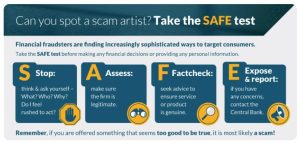
Remember to report anything suspicious to the Garda National Economic Crime Bureau or the
Competition and Consumer Protection Commission (CCPC) immediately.


